
Bible Translations Mystery Solved!
Updated: Jun 24, 2025
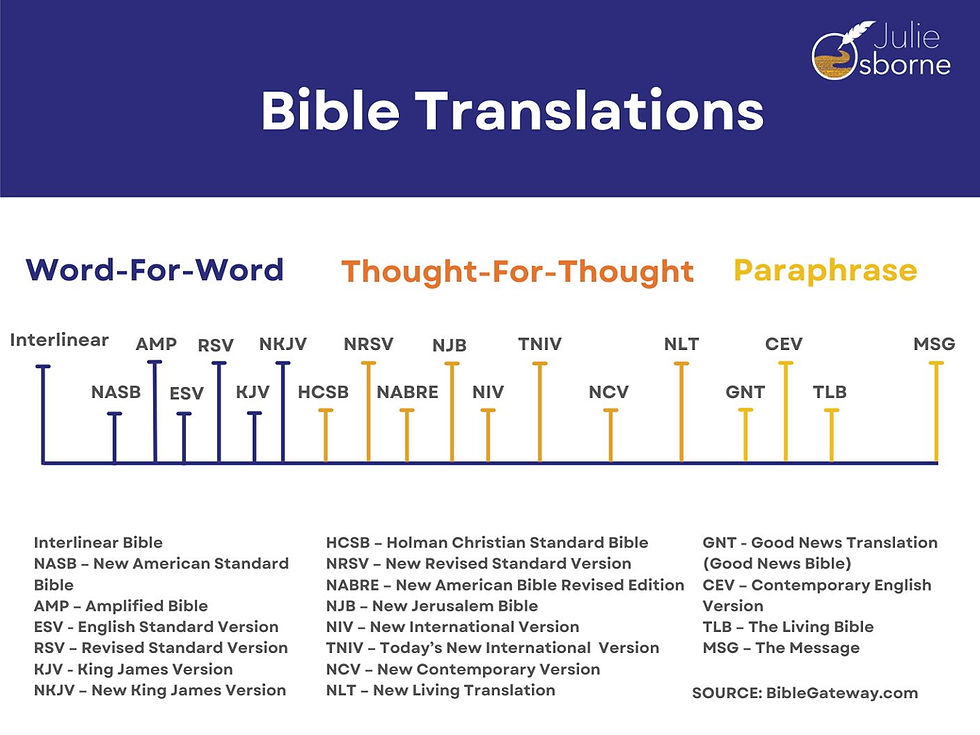
NKJV, NIV, ESV, NLT, The Message... There are so many translations of the Bible! Which one is the best?
In our Bible Bits: Bible Translations video lesson, I explained the differences using a spectrum of popular English translations charted above. At one end are the "Word-for-Word" (or formal equivalent) that seek to accurately preserve the original text of the biblical languages – Hebrew for the Old Testament and Greek for the New Testament.
At the other end of the spectrum are Bibles that can be categorized as a "Paraphrase" – The Message being the best example. These versions seek to clarify the biblical message to a modern audience and are not concerned with preserving the original text word-for-word, so they can be controversial.
In the middle are the "Thought-for-Thought" translations, also called dynamic or the functional equivalent, that are focused on preserving the thoughts and ideas as well as the original intent and context, although not a word-for-word equivalent.
If you would like more information about specific translations, open to the front pages of any Bible, and there will be details explaining who the translators were and for what purpose that particular version was written. For example, The King James Version (KJV) commissioned by King James I of England in 1604, clearly states the purpose, "Appointed to be read in Churches."
So, which English translation is the best?
The one you will read! Just know what you're reading.